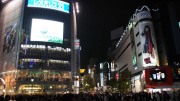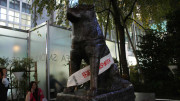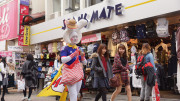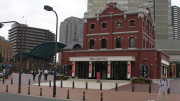
Once the location of the Tokyo Olympics, Shibuya is commercial and entertainment district in Tokyo and as such it is popular amongst the Japanese youth crowd. The Shibuya streets, notably Takeshita St and Center Gai, are filled with plenty of fashion shops and bars.
Shibuya is also home to the Tobacco and Salt Museum, Tepco Power Museum, NHK Studio Park and also the busiest intersection in the world just outside Shibuya station. Not far away from Shibya is the Ebisu Gardens where the Tokyo Metropolitan Museum of Photography and a beer museum is located. The building was once the location of the Yebisu Breweries. Getting to Shibya is easiest via the Metro Ginza line or the JR Yamanote Line.
About Shibuya
The Shibuya district surrounds the Shibuya Railway Station, this station is known as one of the busiest stations in the world. An estimated 2.4 million people pass through Shibuya’s turnstiles every weekday. But Shibuya isn’t Tokyo’s busiest station; Tokyo, Shinjuku and Ikebukuro incredibly usually handle more.
More…
Shibuya Map
Below is a map of Shibuya with the major attractions numbered. You will note the huge Shibuya station at the bottom of the map, its here where the busiest intersection in the world is located. This Intersection is often used in films like the Fast and the Furious: Tokyo Drift and Lost in Translation. The suburb heads out towards the large Yoyogi Park with the popular youth culture area of Harajuku to the right of the Park. Beyond the park we get to the neighbouring suburb of Shinjuku.
More…
Harajuku
Harajuku is known as Tokyo’s teenager town. It is an entire district catering for the young and trendy Tokyoite. The precinct is jam packed with hundreds of small boutiques, cafes, stores and restaurants all focusing on the youth market.
More…
TEPCO Electric Energy Museum
The Tokyo Electronic Power Company (TEPCO) has a free museum called the TEPCO Electric Energy Museum (also known as Denryokukan) which was built to celebrate the 50th anniversary of the company. This free attraction has a wealth of information on how important the electrical resource is to Japan. The museum is in Japanese, but there are English language pamphlets available to explain what is going on in the displays.
More…
Tobacco and Salt Museum
The Tobacco and Salt Museum might seem like a quirky museum to outsiders, but to the Japanese both of these products have been very important in Japanese culture and trade for centuries. This museum traces the history and the importance of both tobacco and salt and its relationship with man kind.
More…
Yebisu Garden Place
Yebisu Garden Place is located in the suburb now more commonly known as Ebisu. Ebisu is located near Shibuya and Roppongi with Ebisu Station being one stop before Shibuya on the JR Yamanote Line.
More…
Bunkamura
Bunkamura is Tokyo’s theatre and concert hall complex situated in Shibuya. Owned by the Tokyu department store chain, Bunkamura is situated next door to Shibuya’s Tokyu store.
More…
Meiji Jingu Shrine
The Meiji Jingu is the Shinto shrine dedicated to the soul of Emperor Meiji. Meiji was the 122nd Emperor of Japan and died in 1912; his wife, Empress Shoken died in 1914. Their souls were enshrined on November 1, 1920. Unfortunately, the original building was destroyed by fire during World War II, but was later rebuilt and opened in October 1958.
More…
NHK Studiopark
NHK or the Nippon Housou Kyouka is Japan’s national broadcaster. NHK is also known as the Japan Broadcasting Corporation and is the public TV and radio service of Japan just as the ABC is to Australia and the BBC is to Great Britain.
More…
Yoyogi Park
Originally the site of the first powered aircraft flight in Japan, what is now Yoyogi Park was also a Japanese military residence and later used by the American forces after World War II.
More…