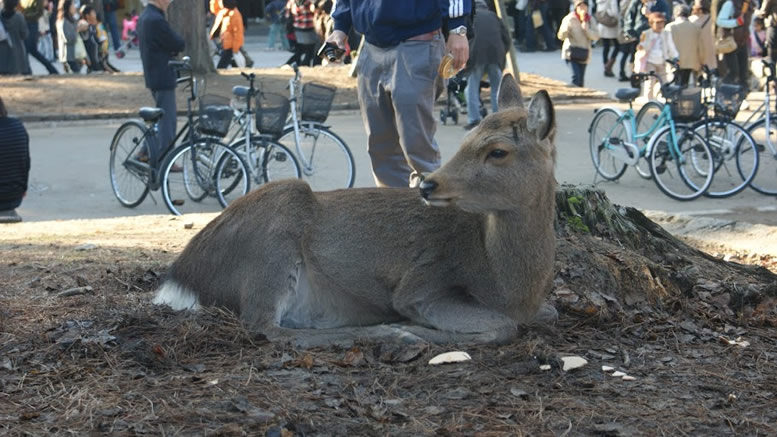
The historic city of Nara is home to hundreds of Sika Deer, which roam around the parks and temples, happily going about their business among the busy visiting crowds.
The deer, protected as a natural treasure of Japan, are considered sacred and are regarded as messengers of the gods, hence they are not killed or eaten. (They just can’t compete with tastier treats like octopus and fugu fish.) A famous Japanese legend tells the story of the mythological god Takemikazuchi arriving in Nara on a white deer to guard the newly built capital of Heijo-kyo. The remaining deer are believed to be descendants of this beautiful white deer.
Many vendors and small stalls sell shika senbei, round, disc-like biscuits made from rice bran and wheat flour. Although some signs say they are “not tasty for humans”, the deer love them. Some of the deer are quite fat, as all they do is look for tourists with snacks.
The deer change their appearance throughout the year. During spring and summer, the deer are dark brown with white spots, and the male deer grow antlers. During the colder months, the deer turn a dark gray and lose their spots. The males grow a mane, and their antlers are fully grown. The males are short-tempered during this time, as it is mating season, and should be approached with caution.
The antlers are cut in a 300-year-old annual event at Kasuga Taisha Shrine, called “Shika-no-Tsunokiri” or the deer antler cutting ceremony. Held over four days each October, this event prevents the deer from hurting each other during fights for a mate and protects the crowds of visitors. A large enclosure called the Omotesando is built at the shrine. A running deer is chased and caught, a little sake is given to calm it down, and then the antlers are cut off and dedicated to the shrine. The antlers are then sold at the Foundation for the Protection of the Deer in Nara Park and can fetch up to 300,000 yen for a fully formed antler. They are much sought after as a way of bringing some of the good luck and sacredness of the deer back home (although check with your local customs before importing animal products to your home country).